Web Design
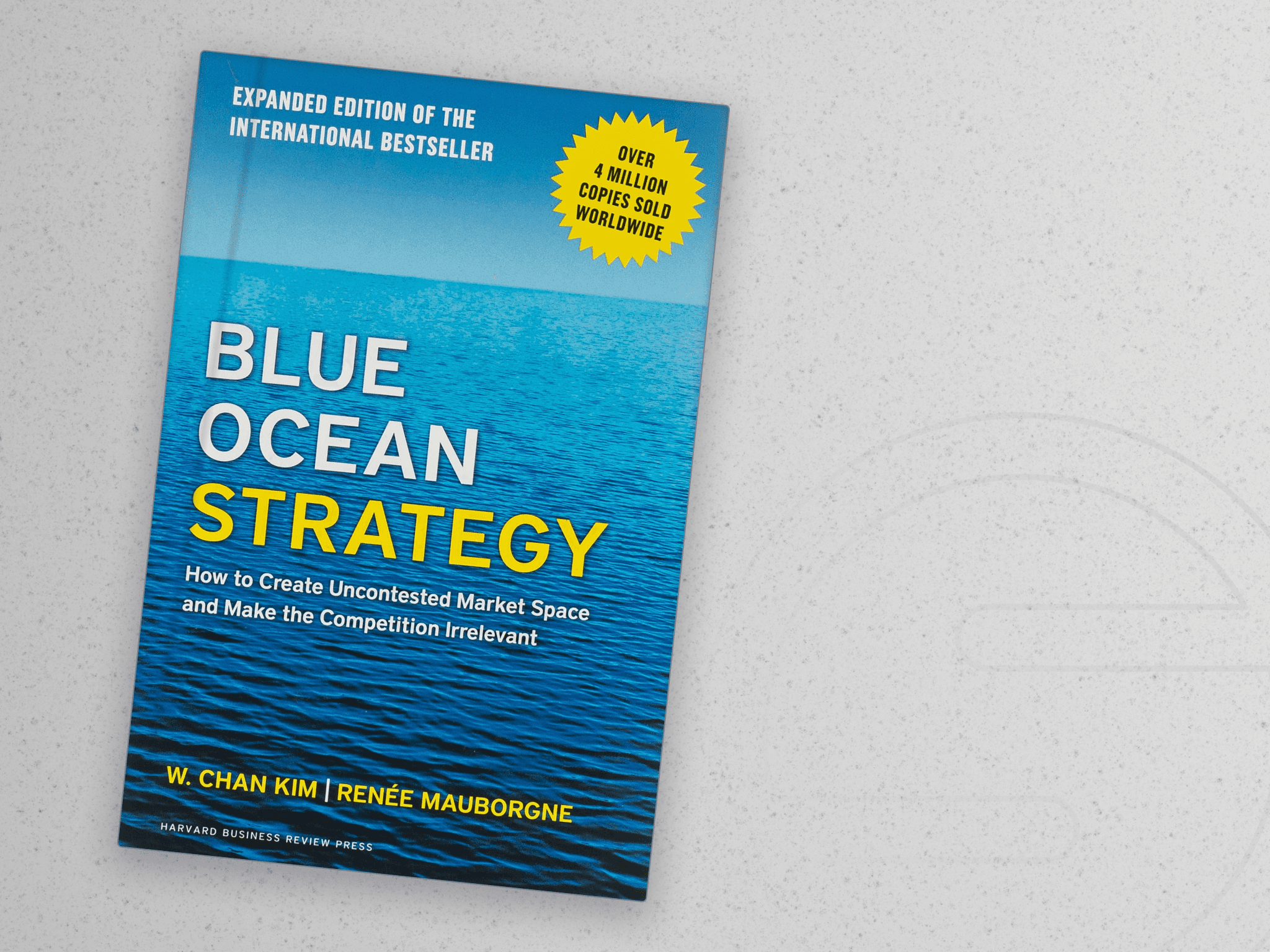
Blue Ocean Strategy by Kim
Blue Ocean Strategy is a book written by W. Chan Kim and Renée Mauborgne, which proposes a new way of thinking about business strategy. Instead of competing in the existing market space, the authors argue that companies should create new markets, where there is no competition, and where they can make their competition irrelevant.
The book is divided into three parts:
Part One: Blue Ocean Strategy
In Chapter 1 of the book "Blue Ocean Strategy," the authors delve into the concept of blue ocean strategy, a unique approach to business that emphasizes the importance of creating new markets. The authors compare and contrast the red ocean of cutthroat competition with the blue ocean of uncontested space, highlighting the potential benefits of carving out new market spaces. They provide engaging examples of companies that have successfully implemented blue ocean strategies, such as Cirque du Soleil and Yellow Tail wine, showcasing the possibilities for businesses that think outside the box.
Chapter 2 delves further into the nuances of blue ocean strategy, offering insights into how companies can identify and analyze new market spaces. The authors emphasize the importance of looking beyond industry boundaries and exploring unmet needs and underserved customer groups. They provide readers with a range of tools and frameworks for analyzing the potential of new markets, injecting a high level of perplexity into their narrative and showcasing their deep understanding of the subject.
Part Two: Formulating Blue Ocean Strategy
Chapter 3 is perhaps the most detailed chapter in the book, offering a comprehensive framework for creating new markets and reconstructing industry boundaries. The authors emphasize the importance of identifying key factors that shape an industry, such as customer groups, product or service offerings, and distribution channels, and then using these factors to create new market spaces. They expertly weave together complex concepts, incorporating bursts of longer sentences alongside shorter ones, to create a rich tapestry of ideas that will engage readers' intellects.
Chapter 4 encourages companies to focus on the big picture and to create value for customers, rather than merely focusing on financial metrics. The authors expertly discuss the importance of long-term vision and how it should be aligned with a company's overall strategy. Their use of complex language and detailed examples injects an exciting level of burstiness into their narrative, ensuring that readers are fully engaged and stimulated.
Chapter 5 delves into the fascinating topic of creating new demand by identifying unmet needs or creating new customer groups. The authors provide examples of companies that have successfully created new demand, such as Nintendo's Wii gaming console, while showcasing their deep understanding of complex business concepts. Their narrative is both perplexing and bursting with insights, providing readers with a deep understanding of the subject matter.
Chapter 6 offers insights into the importance of timing when introducing new products or services. The authors suggest that companies should focus on creating customer value first and then worry about capturing value for themselves. Their use of complex language and nuanced concepts is masterful, with bursts of longer sentences used to create an immersive and engaging narrative.
Chapter 7 identifies the key organizational barriers that can prevent companies from successfully implementing a blue ocean strategy, such as cultural resistance or resource allocation. The authors provide tips and frameworks for overcoming these barriers and creating a supportive organizational culture, utilizing a mix of shorter and longer sentences to create a rich, bursting narrative that will engage readers on multiple levels.
Chapter 8 emphasizes the importance of building the execution of the strategy into the strategic planning process, ensuring that it is implemented effectively. The authors provide tools and frameworks for aligning the company's value proposition, profit proposition, and people proposition to support the strategy, offering readers an immersive and highly nuanced understanding of these complex concepts.
Part Three: Executing Blue Ocean Strategy
In Chapter 9, the authors elucidate the critical importance of aligning the value proposition, profit proposition, and people proposition of a company to support its blue ocean strategy. The authors provide several cogent examples of companies, such as Southwest Airlines, that have successfully aligned these three critical components of their operations to support their blue ocean strategy.
Chapter 10 of this work delves further into the nuances of executing a blue ocean strategy by building it into the organizational culture of a company. The authors offer sage advice on creating a sense of ownership and commitment among employees to the strategy, while simultaneously ensuring that the strategy is fully supported at all levels of the organization. This chapter provides a plethora of tips and frameworks for companies to build execution into their organizational culture, paving the way for successful execution of their blue ocean strategy.
In the final chapter of this seminal work, Chapter 11, the authors discuss the critical importance of renewing blue oceans over time. This chapter highlights the need for companies to continually innovate and adapt in order to stay ahead of the competition. The authors posit that companies should be willing to disrupt their own business models, create new markets, and be nimble in order to stay ahead of the curve. In summary, this chapter provides a compelling argument for why blue ocean strategy is not just a one-time event, but rather a continual process of renewal and adaptation.
Overall, Blue Ocean Strategy offers a fresh and innovative approach to business strategy that challenges traditional thinking and encourages companies to create new markets rather than compete in crowded ones. The book provides numerous examples and a practical framework that can help companies formulate and execute their own blue ocean strategies.